Right now, most businesses are leaking profit through a hole they can’t even see. It’s the ultimate marketing frustration: you’re seeing revenue in your dashboard, but you have no idea which specific dollar spent on ads actually generated that return. This isn’t just a minor technical gap; it’s a massive systemic problem that keeps business owners awake at night. When you can’t tell which ad did the heavy lifting and which one was a complete waste of budget, you aren’t marketing—you’re gambling with your company’s future. In an environment where every cent of margin counts, not having a clear answer to “what actually made them buy?” is a liability you can no longer afford.
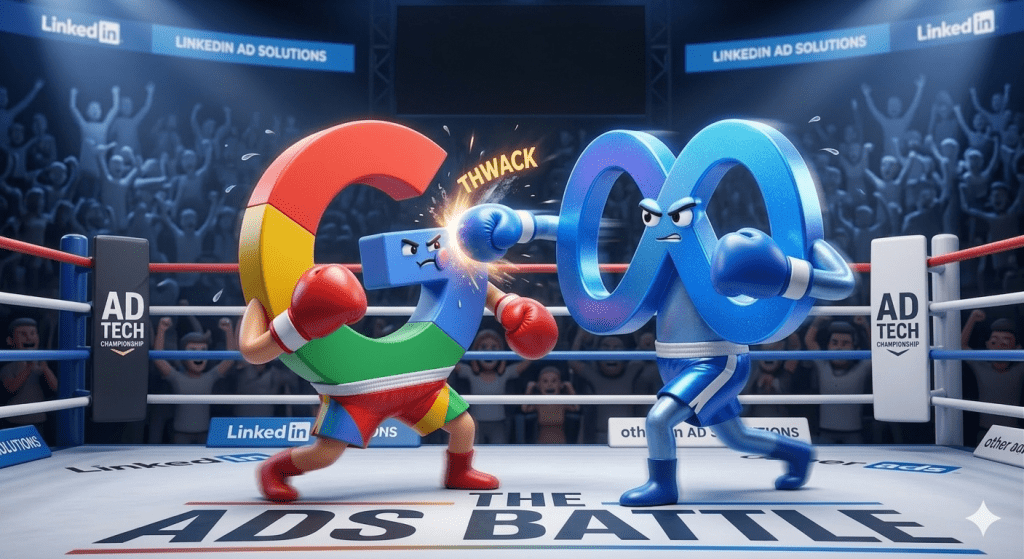
The real sting comes when you realize your own data is actively working against you. You look at Meta and it claims 50 sales; you look at Google and it takes credit for 40; but your actual revenue only reflects 60. This “attribution war” leaves business owners paralyzed, unable to trust the very reports they’re supposed to use for scaling. Whether you’re an e-commerce brand trying to identify which creative actually triggered a checkout, or a service provider wondering which ad led to a high-ticket contract three months later, the frustration is the same. Without a unified system that bridges the gap between the first click and the final sale, you aren’t just losing visibility—you’re losing the ability to out-compete the brands that have already stopped guessing and started measuring.
What is Attribution, Anyway?
Think of attribution as a way to assign credit. Imagine a customer journey like a trail of breadcrumbs:
- On Monday, they see your ad on Instagram while scrolling.
- On Wednesday, they search for your brand on Google and read a blog post.
- On Friday, they click a retargeting ad and finally buy something.
Attribution is the logic that decides which of those three steps gets the “points” for the sale. Without it, you might think your Friday ad is a superstar, while completely ignoring the Monday ad that introduced the customer to your brand in the first place.
How the Big Platforms See Your Data

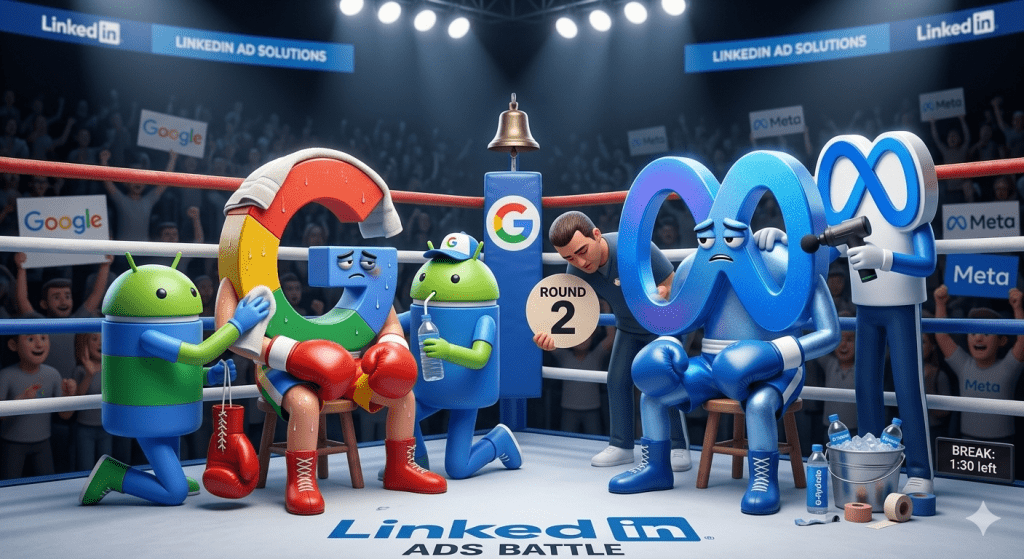
This is where the “attribution war” really happens. Each platform wants to take full credit for the sale to prove its own ROI, but they all play by different rules. To get a clear picture, you have to understand the specific mechanics each one uses to “claim” a conversion.
1. Meta (Facebook & Instagram): The Discovery Engine
Meta is typically the “first touch” where people discover your brand. Because of this, their attribution is designed to capture interest even if the user didn’t buy immediately.
- The Default Model (7-Day Click, 1-Day View, 1-Day Engage): As of early 2026, Meta has tightened its definitions.
- 7-Day Click: If someone clicks a link in your ad and buys within a week, Meta takes credit. Note: As of March 2026, “clicks” now specifically means link clicks, not just likes or comments.
- 1-Day View: If someone sees your ad, doesn’t click, but buys within 24 hours, Meta claims it.
- 1-Day Engage-Through: This is a newer 2026 standard. If someone watches at least 5 seconds of a Reel or Story ad and buys within 24 hours, Meta counts it as a win.
- The Server-Side Solution: Because browsers (Safari/Chrome) are increasingly aggressive at blocking the standard Meta Pixel, using the Conversions API (CAPI) is non-negotiable. It sends data directly from your website server to Meta, bypassing browser blocks to ensure you aren’t “losing” 30% of your reported sales to privacy settings.
2. Google Ads: The High-Intent Closer
Google sits at the bottom of the funnel. By the time someone searches for you, they are usually ready to buy.
- Data-Driven Attribution (DDA): This is now the standard for 2026. Instead of a “winner-takes-all” rule, Google uses AI to analyze your account’s entire history. It assigns a percentage of credit to every touchpoint. If a user watched a YouTube video, then clicked a Display ad, and finally searched for your brand, DDA might give 20% credit to the video and 80% to the search.
- Last Click: The only other “standard” model still supported. It gives 100% of the credit to the very last ad the person clicked. It’s “cleaner” for accounting but ignores the “assist” from your top-of-funnel awareness ads.
- The Shift: Google has officially sunsetted the old “Linear,” “Time Decay,” and “First Click” models. In 2026, it’s either the AI-powered DDA or the rigid Last Click.
3. Klaviyo: The Owned Revenue Powerhouse
Klaviyo doesn’t care about “clicks on the web”—it only cares about how your emails and SMS messages drive sales. This often leads to “double counting” with Meta or Google.
- Email Attribution (Default 5-Day Window): If a customer clicks an email and buys within 5 days, Klaviyo claims that revenue. If they only open the email and buy, Klaviyo can also take credit (though “open” data is less reliable due to privacy updates).
- SMS Attribution (Default 24-Hour Window): Because texts are more intrusive and immediate, the window is much tighter. If they buy within 24 hours of receiving or clicking a text, it’s attributed to SMS.
- The Conflict: If a customer clicks a Meta ad on Monday, gets a Klaviyo email on Wednesday, and buys on Thursday—both platforms will claim 100% of that sale in their own dashboards. This is why you need a “source of truth” (like a CRM or GA4) to see the actual path.
Tailoring the Strategy: Strategy A vs. Strategy B
Depending on what you sell, your attribution needs to look very different.
Strategy A: The Ecommerce Blueprint

For online stores, the sales cycle is often fast and high-volume.
- The Focus: Real-time optimization. We look at Return on Ad Spend (ROAS) and Lifetime Value (LTV) to see which products are driving long-term profit.
- The Goal: Using data to identify “creative winners” quickly so you can scale the ads that are actually moving inventory.
Strategy B: The Service-Based Blueprint

For businesses like clinics, law firms, or agencies, the sale doesn’t happen in a checkout basket—it happens through a conversation.
- The Focus: Lead Quality. We don’t just want a lot of inquiries; we want the right ones.
- The Tech: We use Offline Conversion Tracking. This connects your digital ads to your real-world sales. If an ad generates a lead that turns into a $10,000 contract three weeks later, we feed that info back to the platforms so they find more customers just like that one.
The “Last-Click” Trap: Why Legacy Tracking is Dangerous

For years, the industry relied on “Last-Click Attribution,” which gives 100% of the credit to the very last thing a user clicked.
Think of it like a soccer match:
- The midfielder dribbles past four defenders.
- They give a perfect pass to the striker.
- The striker taps the ball into an empty net.
In a “Last-Click” world, the striker gets all the credit, and the coach might decide to fire the midfielder because they “didn’t score any goals”.
In marketing, if you only look at the last click, you might mistakenly turn off your social media ads because they don’t look like they are “selling”—when in reality, they are the ones filling your funnel.
How We Build Your 360-Degree Growth Engine
At Boko Digital, we don’t just “run ads”—we build the technical foundation that makes those ads actually turn a profit. Our 360-degree approach ensures that your measurement is just as sharp as your creative strategy. Here is exactly how we do it:
1. Moving Beyond the Browser We move your tracking into a more secure, server-side environment. By implementing tools like Meta’s Conversions API, we make sure your data is resilient against ad-blockers and privacy updates. This gives the ad algorithms the high-quality signals they need to find your best customers.
2. Respecting Privacy Without Losing Data We use “Advanced” Consent Mode to keep your business fully compliant with Australian privacy laws. This allows Google’s AI to safely model the behavior of users who opt out of cookies, giving you a much more accurate picture of your true costs while staying legal.
3. Smarter Ad Optimization We don’t just set it and forget it. Whether it’s capturing demand on Google or generating it on Meta, we use native platform tags to feed immediate, high-intent signals back to the bidding engine. This cuts down the “learning phase” for your ads and scales your ROI faster.
4. Tailored Strategy & AI Audits Every business is different. We use AI-driven tools to audit your internal data and find exactly where your funnel is leaking. Whether you are a local service business or a high-volume Shopify store, we align your tracking with your specific business goals.
5. Real Dashboards for Real Decisions Raw data is useless if you can’t read it. We transform your numbers into intuitive, real-time dashboards that map the entire customer journey—from the first time they see you on social media to the final sale. This gives you the clarity to put your budget into the channels that drive the highest Lifetime Value (LTV).
Ready for a Clearer Picture?

At Boko Digital Solutions, we specialize in building the technical infrastructure that makes your data actually mean something. Based in Sydney, we help businesses move past simple “last-click” guesses and into a 360-degree view of their growth.
Stop guessing which ads are working. Book a free consultation today, and let’s find out where your ROI is actually hiding.